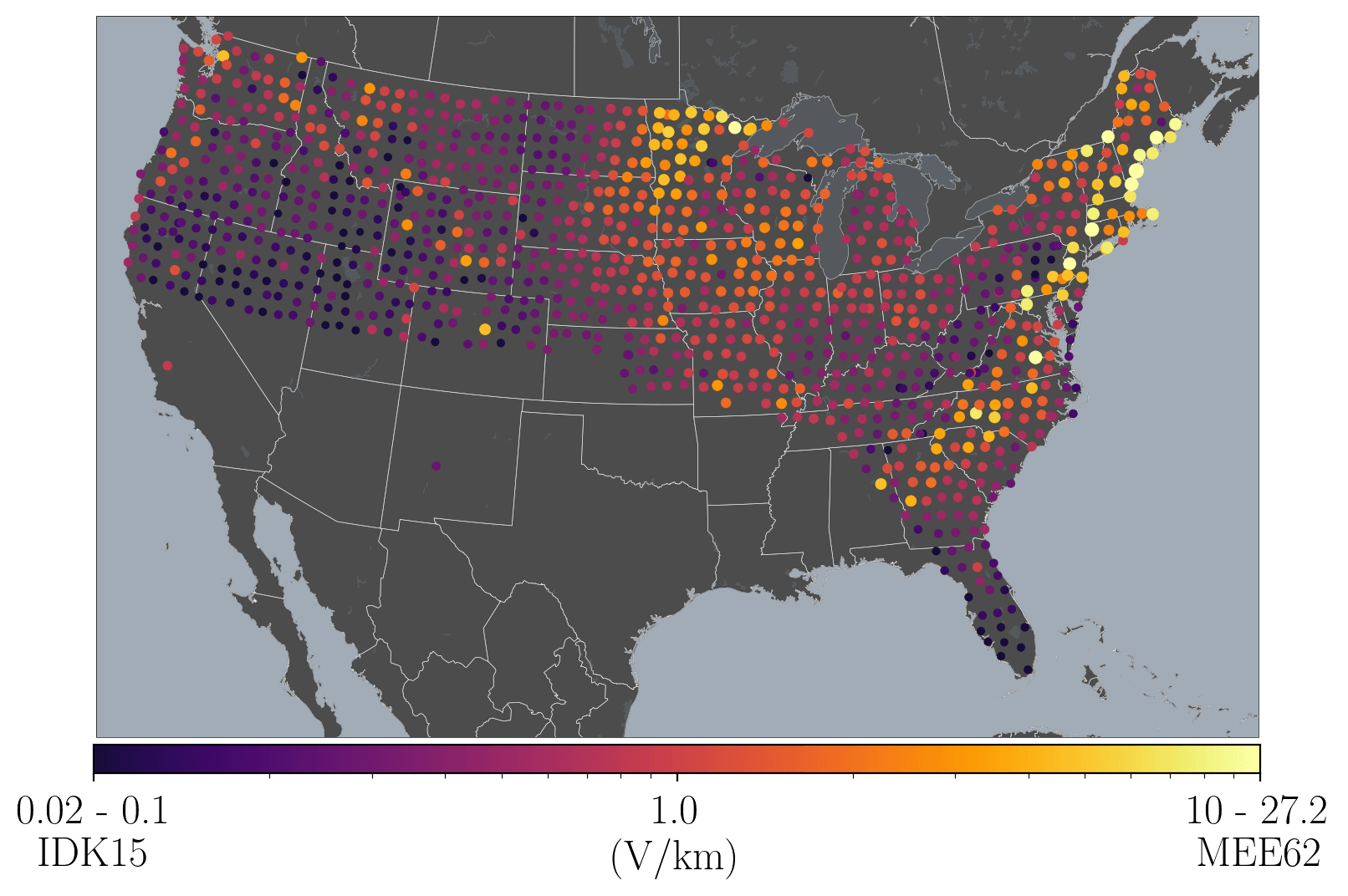
Geoelectric hazards
Quantifying the risk severe geomagnetic storms pose to the North American high-voltage power grid, using realistic three-dimensional Earth conductivity instead of the uniform approximations the industry had relied on.
Read moreMy research sits where fundamental science meets engineering: applying data fusion, statistics and machine learning to satellite and ground-based instrumentation to find signals no single dataset reveals on its own.
Quantifying the risk severe geomagnetic storms pose to the North American high-voltage power grid, using realistic three-dimensional Earth conductivity instead of the uniform approximations the industry had relied on.
Read more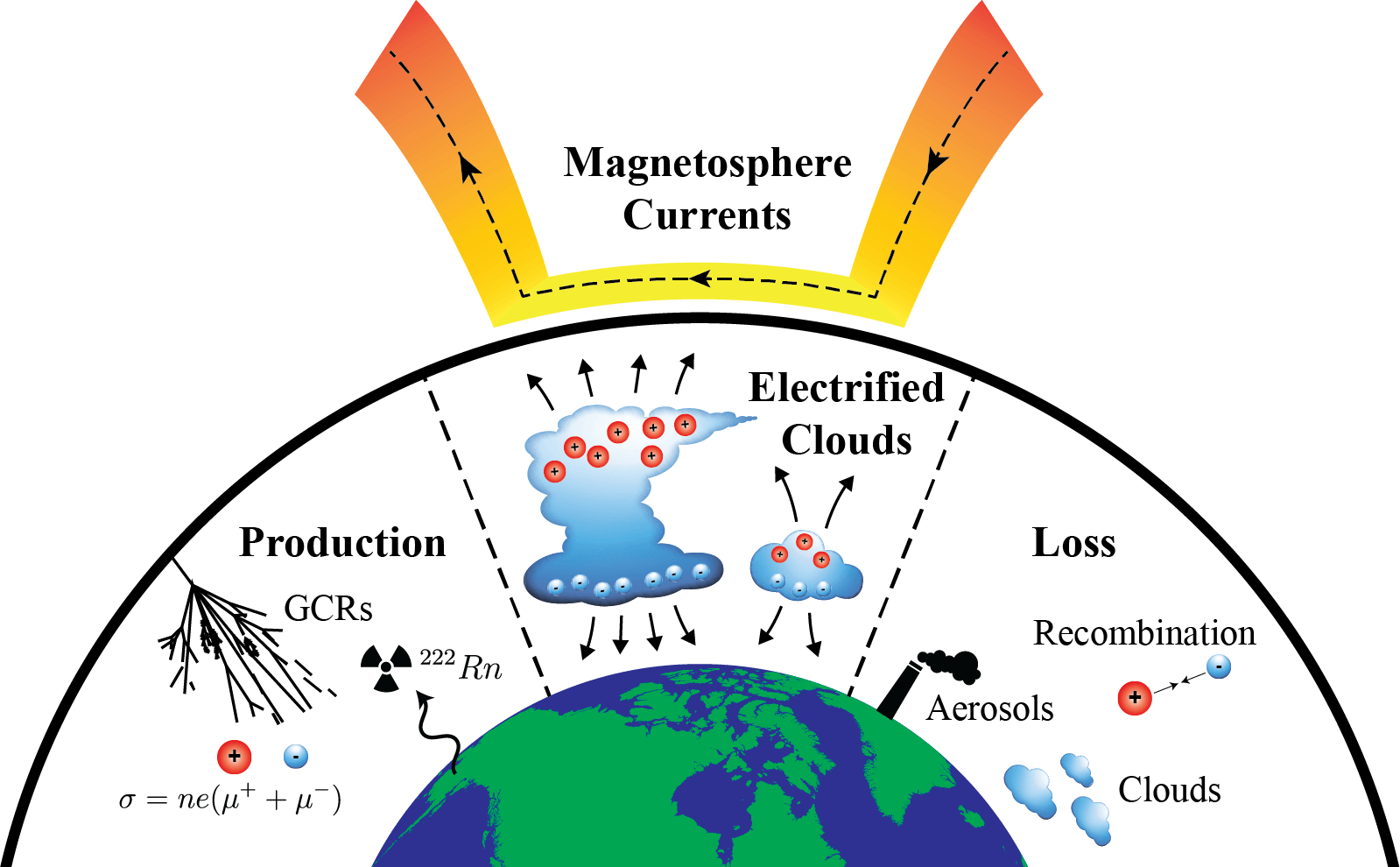
My PhD work: a physics-based model of the electrical connections between thunderstorms, the atmosphere and the ionosphere, built inside a community climate model so the circuit responds to a realistic atmosphere.
Read more
Getting research models out of the lab and into operations — cloud-hosted model staging platforms, physics-constrained machine learning for magnetic field interpolation, and the tooling forecasters actually use.
Read moreWorking with computers has been a constant since I was young — I started in Perl and have since worked in C, C++, Java, Fortran and my current workhorse, Python. Nearly all of it ends up public: papers ship with the notebooks that produced their figures, and the methods become installable packages rather than a directory of scripts.
I am an active maintainer of Matplotlib and Cartopy, and the author of several domain packages that came directly out of this research. That work has its own page: software and open source.